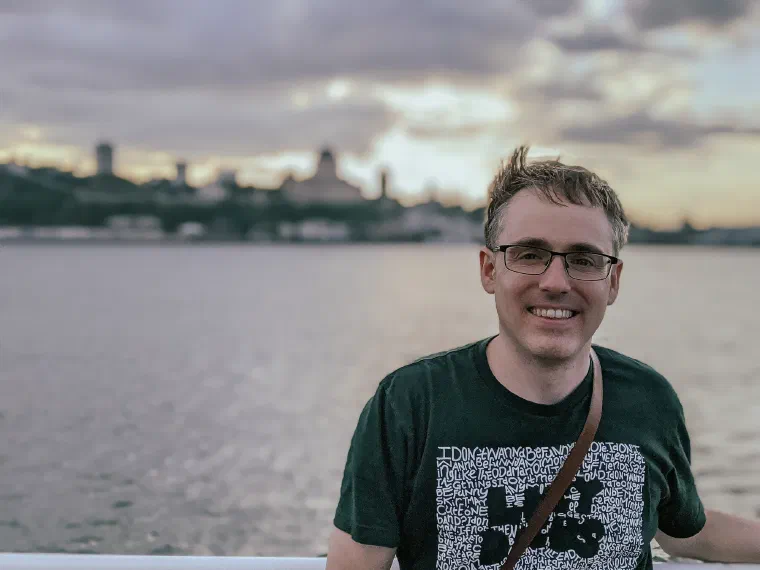
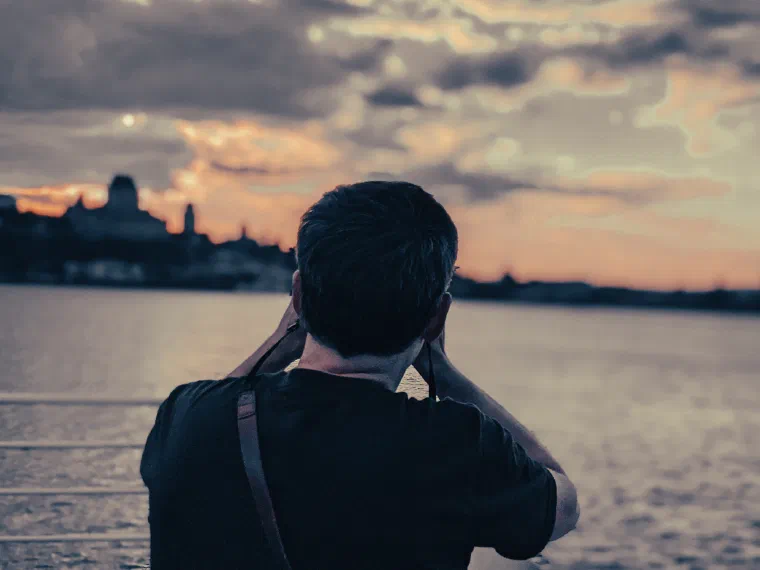
I used to enjoy putting a picture a day on Instagram. I liked to share what I was up to photographically and present images that meant something to me or said something about my development as a photographer. But then the whole thing turned kind of sour, I got tired of the app tracking my every move, and I hated being captive to the algorithm.
So I’m bringing the joy of sharing photos back with more control.
These are my photographs, chosen and captioned by me. Some edited, some not. Presented with a new emphasis by me on curation - hopefully with better descriptions, titles where it warrants one, and collected into meaningful categories.
Documentation and artistic expression #
I have always been fascinated with digital photography - I got my first digital camera my senior year of high school. For me, it is an art form that is approachable to me. I don’t need technical skills in drawing and paints to create an image to say something. And the documentary aspect has been endlessly rewarding in my adult life as I have created a massive library of the people and places that are meaningful in my life.
Photography is also increasingly a way to force me to get out and explore and slow down and notice. Sharing the work in an online gallery is another way to keep me motivated to keep shooting.
Curated galleries and a photostream #
Two ways in, depending on how you like to look:
- Pics — single photographs, often posted right after creation, minimally processed typically, and more of a stream of what I’m currently doing
- Galleries — curated sets, chosen and sequenced to be seen together. A trip, a place, a theme. Portfolio galleries are a special set of galleries that represent my absolute best images.
The galleries are an exercise in curation. I’m working to be more intentional about what I shoot and what I share to try to find that balance of showing the very best, but not getting too stagnant.
Heavy postprocessing in the past, moving toward a subtler aesthetic these days #
You’ll find my earlier photos tend to be fairly heavily postprocessed. This was one of the initial favorite parts of photography for me - seeing how far I could push the highlights, recover shadows, and generally lean on Lightroom to make up for the things I got wrong in the camera. I often experimented with adding radial blur or radial highlights to an image or applied heavy handed presets.
Nowadays I am trying to be a bit more restrained and taking a bit more time to get things right in camera. Shoot with your feet. That kind of thing.
I do use the AI editing tools in Lightroom to be more efficient - automasks, sky selection, subject selection, noise reduction. These things really help. Lightroom will tag that in the metadata, but I haven’t gone out of my way to call those things out in the photos here. I don’t use GenAI tools to fill in details that weren’t there or add or remove things from a scene. If you’re curious about a particular image, you can always ask!
I also don’t really use Photoshop. I lack the skills to do things like recomposing a scene or replacing a sky. I think that kind of thing can be a really cool extension of a photographers voice, but I’m quite terrible at using Photoshop. As I get into macro photography more maybe you’ll see some focus stacks from me, but not much more than that.
Mostly shooting Micro Four Thirds #
After my PhD I bought myself an Olympus E-M10 and shot that for years. Micro Four Thirds felt right to me as a balance between size, cost, and my skill. And I’ve loved traveling with MFT cameras and lenses ever since. In 2025 I upgraded to an OM System OM-5 and I’ve been loving it.
For lenses I basically used a kit lens on the E-M10 + a Panasonic LUMIX 25mm f/1.7 for lowlight and indoor photos for years. I’ve recently invested more in better glass and now I have an Olympus 12–40mm f/2.8 as my daily driver, with a LUMIX 100–300mm when I want to zoom. And I’m just starting to add a 60mm macro lens to the mix. I’m sure you’ll see plenty of those here soon.
But also, lots and lots of my best photos are from whatever smartphone I owned at the time — the best camera is the one you have on you. Every photo is displayed with a little EXIF data footer if you want the details.
Questions about a specific photograph? Email me — I like talking about this stuff.